
Quick Answer
Breast augmentation recovery generally spans six to twelve weeks before patients resume all normal activities, though final results can take three to six months to fully settle. Most patients return to a desk job within four to seven days, while physically demanding jobs may require closer to three weeks off. Swelling and soreness peak in the first 48 to 72 hours, then gradually improve as breast tissue heals and implants drop into a more natural position. A personalized recovery plan matters, since healing time can vary based on implant type, incision placement, and overall health.
Key Takeaways
- Immediate post-surgery pain typically peaks during the first 48 to 72 hours and improves significantly within the first week.
- Most patients wear a surgical compression bra around the clock for the first few weeks to support healing and reduce swelling.
- Light walking is encouraged almost immediately to promote circulation and lower the risk of blood clots, while heavy lifting is restricted for about six weeks.
- Breasts begin dropping into a more natural position around week two, with final shape typically settling between three and six months.
- Many patients return to a desk job within four to seven days, while physically demanding jobs may require about three weeks of downtime.
- Watching for signs of infection or capsular contracture during recovery helps patients catch potential complications early.
- Patience matters just as much as physical healing, since emotional highs and lows are a normal part of the recovery process.
What Happens in the Recovery Room After Breast Augmentation Surgery?
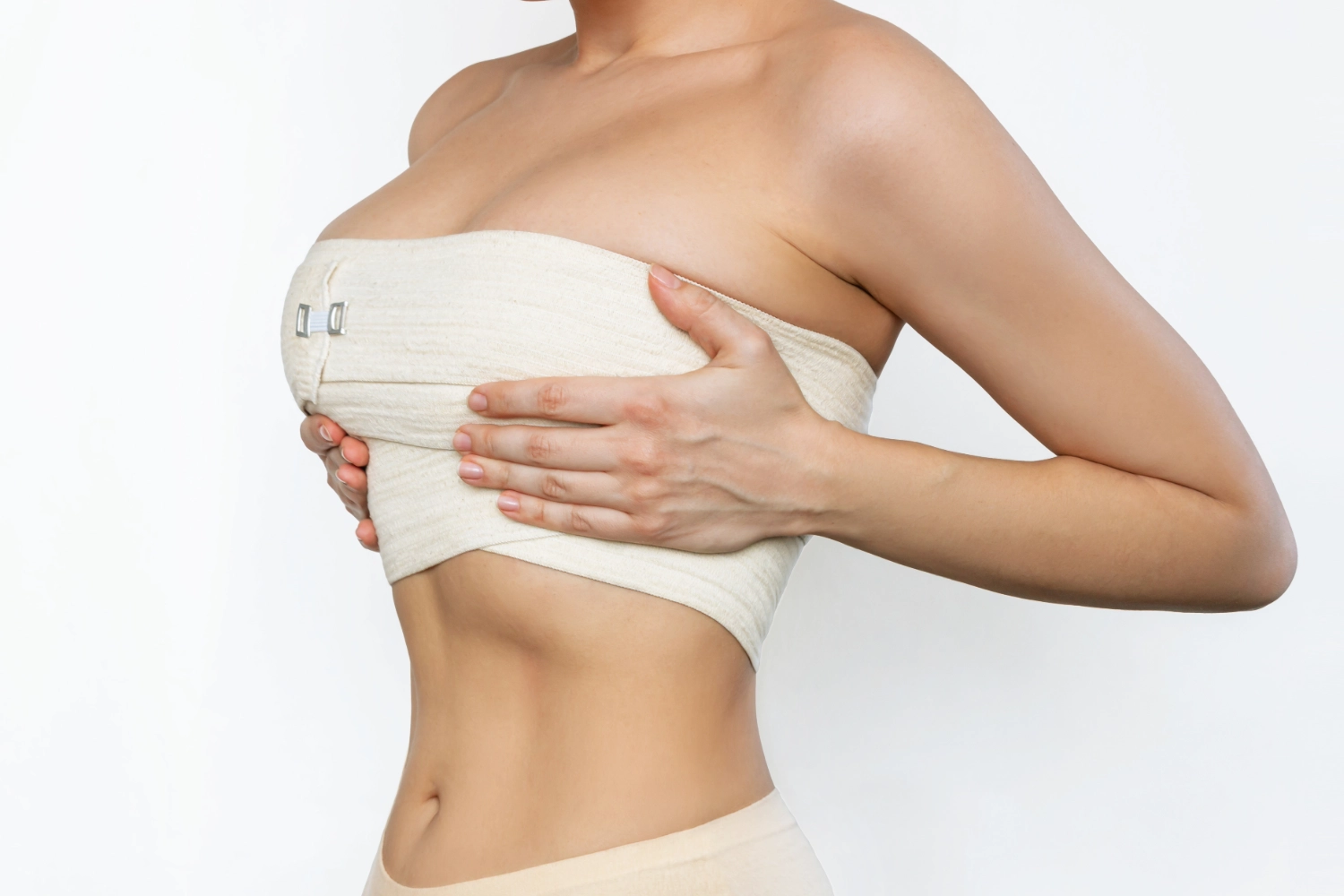
Immediately after breast augmentation surgery, patients wake up in a recovery room where the surgical team monitors vital signs and initial pain levels. Grogginess from anesthesia is common, along with tightness across the chest as the breast tissue adjusts to the new implants. Most patients are fitted with a surgical bra or compression garment before leaving the recovery area, since this support plays an important role in the earliest stage of healing.
A friend or family member typically needs to drive the patient home, as driving is not permitted directly after anesthesia. Surgeons review post-op instructions before discharge, covering pain medication, activity restrictions, and what symptoms would warrant a call to the office. Patients usually leave the same day, since breast augmentation is performed on an outpatient basis for the vast majority of cases.
What Does the First Week of Breast Augmentation Recovery Look Like?
The first week after breast augmentation surgery is typically the most physically demanding part of the entire recovery process. Acute pain and muscle soreness are most noticeable during the first 48 hours, often described as a tight, achy sensation across the chest and upper body rather than sharp pain. Prescribed medications, including pain medication and sometimes muscle relaxers, help manage this discomfort during the initial days.
Swelling and bruising also tend to peak within the first three to five days before beginning to subside. Patients typically notice the following during this stage of augmentation recovery:
- Visible swelling that can temporarily distort breast shape and size
- Bruising around the incision site that fades over one to two weeks
- Reduced nipple sensation, which is usually temporary
- Fatigue that improves gradually as the body responds to the healing process
Most patients can resume light activities, including light walking around the house, within a day or two. Light walking supports circulation and helps reduce the risk of blood clots, which is one reason surgeons encourage gentle movement even in the earliest days of recovery. Sleeping on the back with the upper body slightly elevated is generally recommended for the first one to two weeks, since side or stomach sleeping can put unnecessary pressure on the incision site.
By the end of the first week, many patients feel comfortable enough to return to a desk-based job. Those with physically demanding jobs, however, often need closer to three weeks off before lifting, bending, or strenuous activity is safe again. Anyone comparing different implant options should ask their surgeon how implant size and placement might affect this early recovery window, since larger implants or submuscular placement can sometimes extend initial soreness.
How Does Recovery Progress From Weeks Two Through Six?
Recovery generally becomes noticeably easier between weeks two and six, as acute pain fades into mild soreness or tightness. Most patients are able to stop prescribed pain medication within the first one to two weeks and rely on over-the-counter options if needed. Residual swelling continues to decrease during this stretch, though some patients still notice mild puffiness, especially by the end of the day.
Around the two-week mark, breasts often begin settling into a more natural position as the surrounding tissue relaxes and the implant shifts downward. This is sometimes described informally as implants beginning to "drop and fluff," and it represents a normal part of the healing process rather than a concern. Surgeons typically clear patients for the following during weeks two through six:
- Gentle walks and light cardio, gradually increasing in duration
- Return to most normal daily activities, aside from heavy lifting
- Transitioning out of the surgical bra into a soft, supportive compression garment
- A follow-up appointment to check incision healing and overall progress
Heavy lifting, strenuous exercise, and activities that raise the heart rate significantly are still restricted through roughly six weeks post-surgery. This includes lifting heavy objects at home or work, since added strain on the chest muscles can affect healing or implant position before tissue has fully stabilized. Patients are also advised to avoid underwire bras until their surgeon confirms the incision site has healed enough to tolerate the extra pressure.
When Do Breast Implants Reach Their Final Position and Results?
Breasts typically start looking more natural in shape by six to eight weeks after surgery, though full recovery and final results can take considerably longer. Most patients can resume normal activities without restriction somewhere between six and eight weeks, assuming healing is progressing as expected. Complete settling of the implants into their final position, however, often takes three to six months.
This longer timeline is a normal part of how breast tissue and scar tissue mature after surgery. Incisions themselves may continue to fade and mature for up to a year, gradually becoming less noticeable. Nipple sensation, if affected after surgery, typically continues improving over these same months as nerves heal. Patients often feel some impatience during this stretch, since the visual difference between six weeks and six months can be significant, and understanding this timeline in advance tends to ease that frustration.
What Complications Should Patients Watch for During Recovery?
Most breast augmentation recovery periods proceed smoothly, but patients should still know the signs of a potential complication. Redness, warmth, unusual drainage, or pus at the incision site can indicate infection and should prompt a call to the surgeon's office right away. Excessive or one-sided swelling that develops well after the initial healing window can also signal an issue worth evaluating.
Capsular contracture, a condition where scar tissue hardens around the implant, is another concern surgeons monitor for during follow-up visits. It can develop months or even years after surgery and may cause firmness, discomfort, or a change in breast shape. Implants can also shift over time in rare cases, which sometimes requires a secondary procedure to correct. Patients curious about long-term implant care and when a secondary procedure might be worth considering can read more on when a breast revision may be the right choice.
How Can Patients Help Their Body Heal Faster?
While every patient heals at their own pace, several habits consistently support a smoother, faster recovery after breast augmentation. Staying hydrated helps the body manage inflammation and supports overall tissue repair during the healing process. Wearing the recommended surgical bra or compression garment as instructed, rather than removing it early, provides steady support that helps minimize swelling and keeps breast tissue stable while it heals.
Following the surgeon's recommendations closely also makes a meaningful difference in outcomes. This includes:
- Taking prescribed medications on schedule rather than waiting until pain becomes severe
- Avoiding heavy lifting and strenuous activities until specifically cleared
- Attending every follow-up appointment, even once symptoms feel fully resolved
- Prioritizing rest and sleep, since the body does much of its repair work overnight
Overall health going into surgery also plays a role in how quickly someone heals. Patients who are otherwise healthy, do not smoke, and follow personalized advice from their surgical team tend to move through the recovery timeline with fewer setbacks.
Every patient's healing process looks a little different, which is why we build a personalized recovery plan for each breast augmentation patient rather than relying on a one-size-fits-all timeline. This includes guidance on implant type, whether saline or silicone options such as Mentor implants, since different implants can influence swelling patterns and the pace of early healing. Our patients in San Antonio also benefit from ongoing post-operative support at every follow-up visit, which helps us catch any concerns early and keep recovery on track.
Ready to Learn More About Your Breast Augmentation Recovery Timeline?
Understanding what to expect at each stage of recovery makes the entire breast augmentation journey feel far less uncertain. At Ferguson Plastic Surgery and Aesthetics, we walk every patient through a clear, personalized recovery plan from the first consultation through final results. Schedule a consultation today and we will discuss your goals and build a recovery timeline tailored to your body and lifestyle.
Frequently Asked Questions
How long does breast augmentation recovery take overall?
Most patients need six to twelve weeks before resuming all normal activities without restriction. Final results, including the implants settling fully into position, can take three to six months to appear. Individual healing time varies based on implant type, placement, and overall health, and we walk each patient through what to expect for their specific case.
When can I go back to work after breast augmentation?
Patients with desk jobs typically return to work within four to seven days after surgery. Those with physically demanding jobs, such as roles involving heavy lifting or frequent bending, usually need about three weeks before returning. We provide specific guidance based on each patient's job and recovery progress.
How long do I need to wear a compression bra after surgery?
Most patients wear a surgical compression bra around the clock for the first one to two weeks to support healing and minimize swelling. After that, many transition into a softer compression garment for several additional weeks. Underwire bras are generally avoided until we confirm the incision site has fully healed.
Is swelling normal after breast augmentation, and how long does it last?
Yes, swelling is a normal and expected part of breast augmentation recovery. Most swelling occurs in the first three to five days and gradually improves over four to six weeks. Residual, mild swelling can occasionally linger a bit longer as breast tissue continues settling into its final shape.
What are the signs of a complication I should watch for?
Redness, warmth, pus, or unusual drainage at the incision site can indicate infection and should be reported to our office promptly. Excessive or one-sided swelling that appears well after the initial healing period is also worth having evaluated. Capsular contracture, which involves scar tissue hardening around the implant, is a longer-term concern that follow-up appointments help us monitor.
Can I exercise during breast augmentation recovery?
Light walking is encouraged early in recovery to support circulation and reduce the risk of blood clots. Strenuous exercise and heavy lifting are typically restricted for about six weeks to protect the incision site and allow tissue to heal properly. We will walk you through your specific timeline before clearing you to resume your normal workout routine.
.png)
.png)
